Off-Grid Water Backup Tips Every Household Should Know
Introduction
Most households don't think about their water supply until something interrupts it — a boil-water advisory, a burst municipal main, a drought-driven restriction, or a storm that knocks out power to a well pump. Unlike electricity, where generators and battery backups have become fairly mainstream, water backup planning tends to get overlooked. That's a gap worth closing, especially as more regions deal with aging infrastructure and increasingly unpredictable weather.
This article walks through practical, layered approaches to off-grid water backup — including storage, filtration, and newer approaches like atmospheric water generation — so you can build a plan that fits your household rather than relying on a single point of failure. New to AWG? Start with our explainer on how atmospheric water generation really works.
Start With Storage: The Simplest Layer
Before anything else, basic water storage is the foundation of any backup plan. The general guideline from most emergency preparedness resources is a minimum of one gallon per person, per day, for at least three days — though many households aim for two weeks or more if space allows.
A few practical tips:
- Use food-grade containers specifically rated for water storage, not repurposed containers that previously held other liquids.
- Rotate your stored water every six to twelve months to keep it fresh, even though properly stored water can technically last much longer.
- Store in a cool, dark place away from direct sunlight, which can degrade certain plastic containers over time and promote algae growth if any light gets through.
Storage is reactive, though — it's a buffer, not a renewable source. That's where the next layers come in.
Layer Two: Filtration for Existing Water Sources
If you have access to a water source that isn't necessarily safe to drink as-is — a stream, pond, rainwater collection, or a compromised municipal supply — filtration becomes essential.
Common household-level options include:
- Portable water filters (pump or gravity-fed) rated for removing bacteria and protozoa
- UV purification devices for a fast, chemical-free disinfection step
- Chemical treatment tablets as a lightweight backup option
- Whole-house or under-sink filtration systems for longer-term reliability at home
The key limitation here is that filtration only works if you have something to filter. If your well runs dry or your rain barrels are empty, filtration doesn't create new water — it just makes existing water safer.
Layer Three: Rainwater Collection
In many regions, rainwater harvesting is a legal and highly practical way to build an off-grid water buffer. A basic setup includes gutters directing water into a sealed storage tank, with a first-flush diverter to keep debris and roof contaminants out of your main storage.
Things to keep in mind:
- Check local regulations — some regions restrict or require permits for rainwater collection.
- Rainwater should still be filtered and/or disinfected before drinking.
- Tank size should be matched to your roof's collection area and your region's average rainfall.
Rainwater collection is excellent for climates with regular precipitation but becomes unreliable during extended dry spells — which is exactly when backup water matters most.
Layer Four: Atmospheric Water Generation
This is where off-grid water generation from atmosphere systems fit into a broader backup strategy — not necessarily as a replacement for storage or filtration, but as an additional, renewable layer that doesn't depend on rainfall, wells, or municipal infrastructure at all.
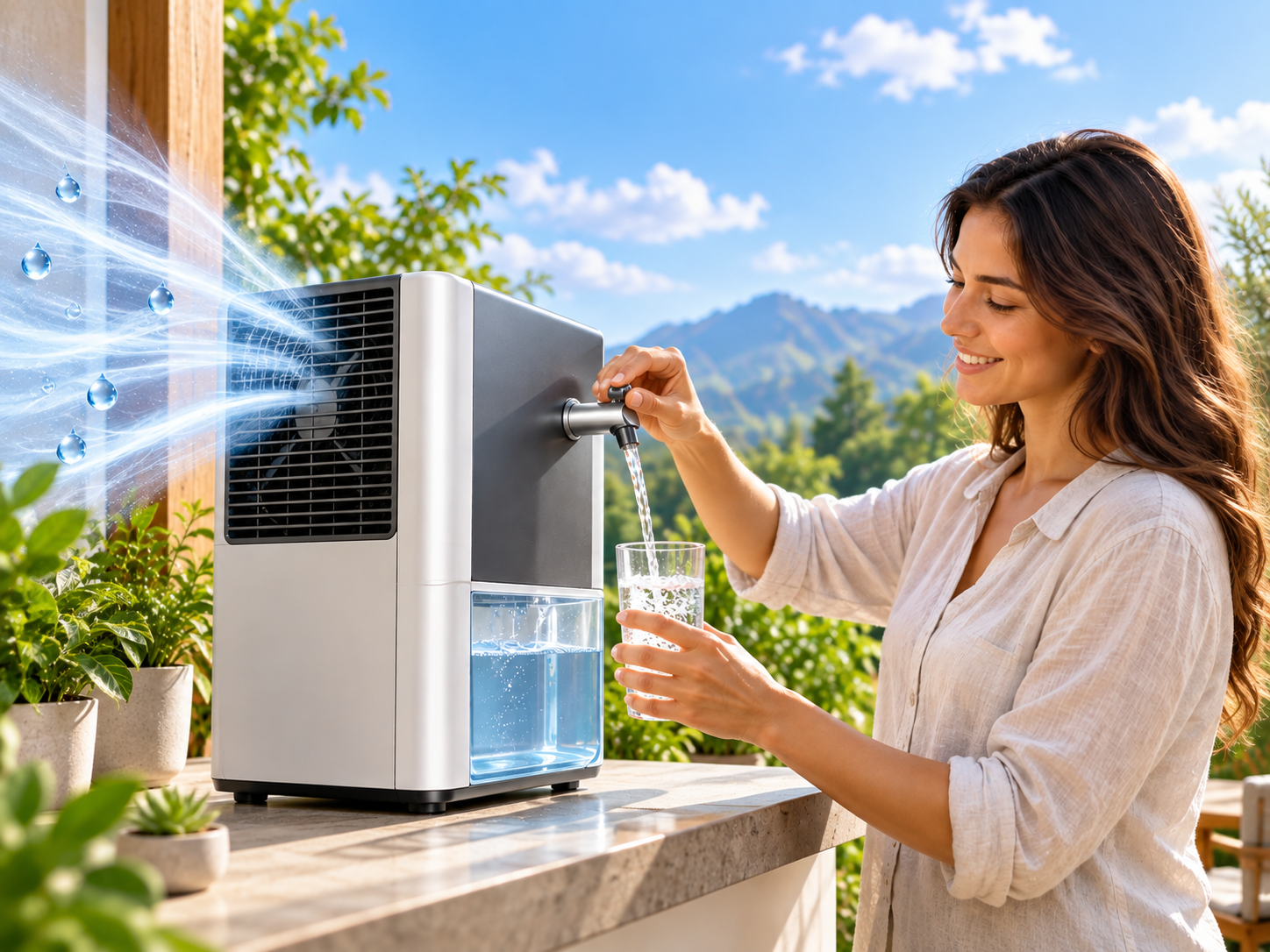
Atmospheric water generation works by cooling humid air until moisture condenses, then filtering the collected water for use — essentially engineering the same process that creates morning dew. Because it pulls directly from ambient air, it functions independently of drought conditions affecting groundwater or reservoirs (though its own output is tied to local humidity levels).
Options range from expensive commercial units to DIY guides like the Water Freedom System, which walk households through building a smaller-scale version using accessible parts. The appeal for off-grid or emergency-focused households is straightforward: once built, it doesn't rely on a pre-existing water source, a working well pump, or trucked-in supplies. See what's included in the Water Freedom System guide and current pricing here.
Building a Layered Plan, Not a Single Solution
The households best prepared for water disruptions typically don't rely on just one method — they layer several approaches:
- Baseline storage for immediate short-term coverage
- Filtration to make use of any available untreated water
- Rainwater collection where climate and regulations allow
- Atmospheric water generation as a renewable, infrastructure-independent backup
This layered approach reduces the risk of any single point of failure. A drought might empty your rain barrels, but a properly maintained AWG unit can still be pulling moisture from ambient air. A power outage might affect an electric filtration system, but stored water and manual filters remain usable. For how this layer performs when infrastructure fails, read our take on why DIY water generation helps in emergency situations.
Practical Household Tips to Get Started
- Do a household water audit. Calculate how much water your family actually uses daily for drinking, cooking, and hygiene, so your backup plan is sized appropriately.
- Test your emergency systems before you need them. Don't wait for an actual emergency to find out your filter is clogged or your storage containers have leaked.
- Keep manual backup options on hand. Battery or hand-powered filtration options matter if the grid goes down alongside your water supply.
- Factor in climate when choosing methods. Rainwater collection makes more sense in wetter regions; AWG performs best in moderate-to-high humidity areas.
- Don't neglect maintenance. Whether it's cleaning storage tanks, replacing filter cartridges, or wiping down AWG condenser surfaces, backup systems that sit unused for long periods need periodic upkeep to work when called upon.
Final Thoughts
Water backup planning doesn't need to be complicated, but it does benefit from thinking in layers rather than relying on a single method. Storage handles the immediate emergency, filtration extends the usefulness of whatever water you can access, and renewable approaches like atmospheric water generation add a layer of resilience that isn't tied to rainfall or municipal supply at all. Households serious about off-grid readiness are increasingly combining all of the above — treating water security the same way they'd treat backup power or food storage: as a system, not a single purchase.
Want to put this into practice? Check the official Water Freedom System site for today's guide offer and start your layered plan with a proven DIY build. You can also review our full Water Freedom System review for a breakdown of what's inside.
Add a Renewable Layer Today
Storage + filtration + AWG — build the backup that doesn't run dry.
Get the Complete Guide →Instant download · 60-day guarantee